The Hutchison Lecture Tour is undertaken each year by the winner of the Hutchison Medal. The lecture tour typically consists of several multi-day trips to different parts of Canada where a number of lectures are given at university, government, and geological society venues. The Hutchison Lecture Tour is supported by the Canadian Geological Foundation’s Hutchison Fund.
Important Update for the 2025–2026 Hutchison Lecture Tour
Please note that the in-person schedule for the 2025–2026 Hutchison Lecture Tour is now fully booked. The final event of the tour will be held on Friday, 20 February 2026 in hybrid format (in person & via Zoom) at Laurentian University (Topic 2: Geological mapping and mineral resource assessments at the Seafloor). The Zoom link will be shared with all GAC members. If you are not currently a GAC member, you may join here: https://gac.ca/members/join-renew/
If you are a Campus GAC Representative or a Seminar Coordinator interested in receiving the joining link, please contact Nadia Mohammadi at: Nadia.Mohammadi@NRCan-RNCan.gc.ca
2025 W. W. Hutchison Medalist
Dr. John Jamieson, Professor, University of Ottawa
2025-2026 Hutchison Lecture Schedule
| Date | Day | Region | Location | University/Organizations | Topic | Time (local to venues) | Time (EST) | Event Location | Platform |
| 23 October 2025 | Thursday | ON | Ottawa | Geological Survey of Canada, Ottawa (Logan Club Lecture Series) | Topic 1 | 2:00 PM | 2:00 PM | Allison Hall | In-person & virtual |
| 14 November 2025 | Friday | ON | Kingston | Queen’s University | Topic 2 | 13:30 pm | 13:30 pm | Miller Hall, Queen’s University | In-person |
| 20 November 2025 | Thursday | ON | Toronto | University of Toronto | Topic 1 | 12:00 | 12:00 | ES2093; Department of Earth Sciences, University of Toronto | In-person |
| 21 November 2025 | Friday | ON | London | Western University | Topic 2 | In-person | |||
| 24 November 2025 | Monday | QC | Quebec City | Université Laval /INRS | Topic 2 | 13:30pm | 13:30pm | In-person | |
| 28 November 2025 | Friday | BC | Kelowna | UBC-Okanagan | Topic 1 | 11:00 AM | 8:00 AM | In-person | |
| 02 December 2025 | Tuesday | BC | Vancouver | UBC | Topic 2 | In-person | |||
| 03 December 2025 | Wednesday | AB | Calgary | University of Calgary | Topic 1 | 12:00 PM | 2:00 PM | 136 Earth Sciences Bldg | In-person |
| 05 December 2025 | Friday | AB | Edmonton | University of Alberta | Topic 2 | 12:00 PM | 2:00 PM | Henry Marshall Tory Building 3-36 | In-person & virtual (Zoom) |
| 09 January 2025 | Friday | BC | Victoria | University of Victoria | Topic 2 | 3:00 PM | 6:00 PM | Engineering and Computer Science room 116 | In-person |
| 20 February 2026 | Friday | ON | Sudbury | Laurentian University | Topic 1 | cancelled | cancelled | Willet Green Miller Centre – Room B045 | in-person & virtual (Zoom)
|
| 20 February 2026 | Friday | ON | Sudbury | Laurentian University | Topic 2 | 07:00 PM | 07:00 PM | Executive Learning Centre (FA-386) in the Fraser Auditorium Building | in-person & virtual (Zoom)
Final Stop of the GAC 2025–2026 Hutchison Lecture Tour To join virtually, please contact Michael Lesher at <mlesher@laurentian.ca> to receive the Zoom link. |
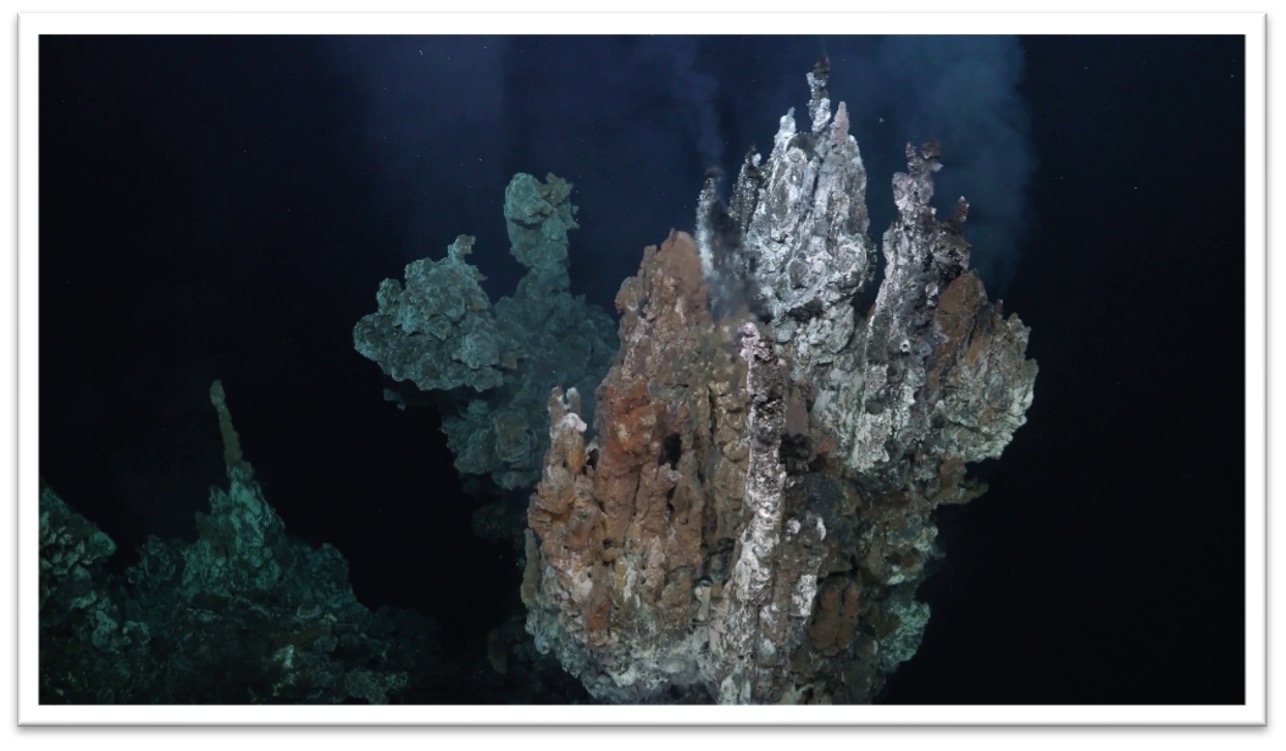
Topic 1: “More than just sulfides… Assessing the global diversity of seafloor hydrothermal systems”
Abstract: Since the discovery of black smoker-style hydrothermal venting at EPR 21°N in 1979, over 400 sites of high-temperature venting have been discovered on the seafloor. Vent fields are typically characterized by the formation of metal-rich chimneys and mounds dominated by sulfide and sulfate minerals, and host unique ecosystems composed largely of vent obligate species. Mineralogical, geochemical, and isotopic characterization of the deposits show variability that reflects regional tectonic and local geological controls on hydrothermal deposit compositions. Despite these advances, recent discoveries continue to exceed the known limits of compositional variability. These new discoveries range from sulfur-poor, talc-rich deposits (e.g., Von Damm Vent Field on the Mid-Cayman Spreading Centre or Loki’s Castle on the Mohns Ridge) to deposits dominated by primary oxidized mineral assemblages (e.g., the Suye field on the Southwest Indian Ridge). In this presentation, I will discuss this increasing variety of hydrothermal depositional styles and compositions, with a focus on the implications of this variety on our understanding of global submarine hydrothermal chemical budgets, and the mineral resource potential of hydrothermal deposits on the seafloor.
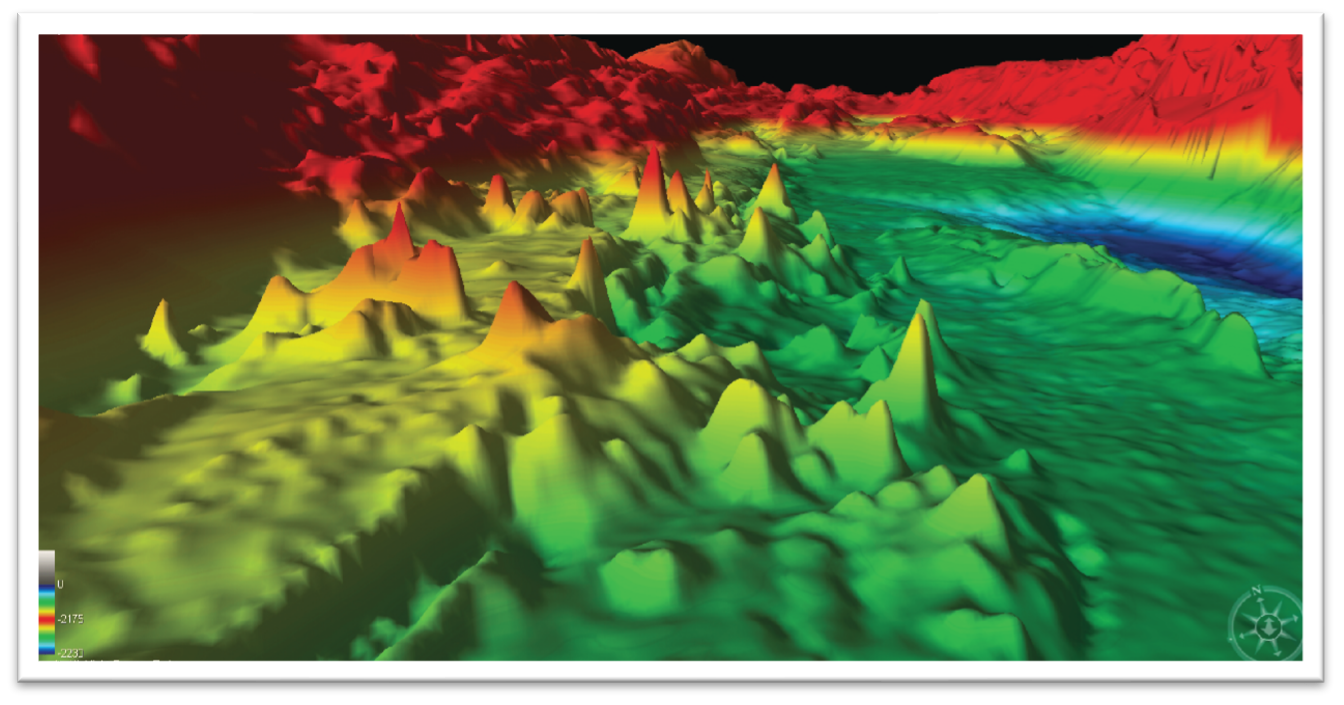
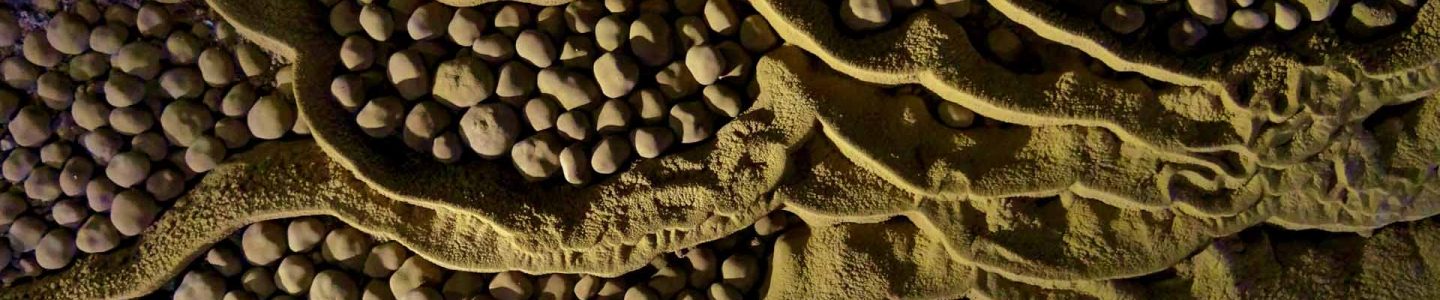
Topic 2: “Geological mapping and mineral resource assessments at the Seafloor”
Abstract: Deep-sea mining is seen by many as the last frontier for terrestrial mining, and a secure, untapped source of critical minerals. Although deep-sea mining is yet to occur, exploration by both countries and private industry has been ongoing for decades, and there is now a rush to establish regulations for mining in international waters. Conversations regarding deep-sea mining are often dominated by the uncertainties associated with environmental impact, economic viability, and the regulatory framework. However, a critical, but surprisingly often overlooked, yet fundamental aspect of the deep-sea mining discussion is the resource potential of deep-sea minerals (i.e. how many deposits are on the seafloor, and are they big enough or rich enough to mine). In this presentation, I will present an overview of mineral exploration at the seafloor, including how deposits are found, and how their economic viability is determined. I will discuss how established land-based mineral exploration approaches are combined with novel deep-sea exploration technology to find and evaluate seafloor massive sulfide deposits that form at hydrothermal vents, and manganese nodules that form on the abyssal plains.